
Find a boat
There aren’t many available second-hand, so if you see one, buy it. As all the boats available conform to the rules set by the ICF, they will all be ready to compete after the outfitting is done.
Volume and shape
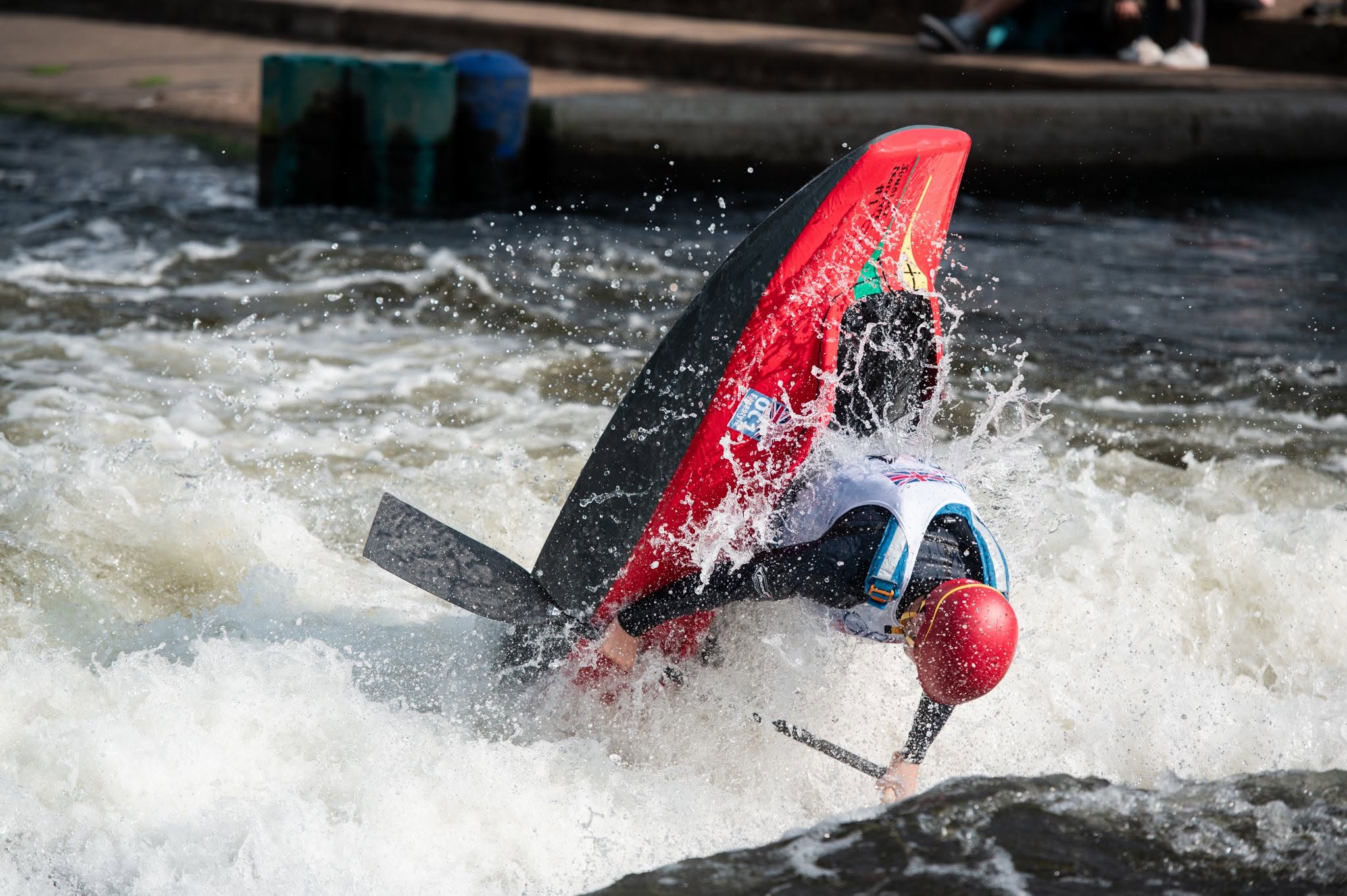
Higher-volume ends can provide more lift for loops and aerial moves, while lower-volume designs may feel easier to initiate into cartwheels and ends. Rocker, width and hull edges influence looseness, carving and stability. There is no universal best shape. Lower-volume ends include the plastic CU Fly and the early Kaos OC1, made from carbon–Kevlar. Higher-volume ends are found on the original Blackfly and the Blackfly Delta, both plastic boats suitable for larger paddlers. The Acid sits in between, with more volume at the front than the rear. It is more suitable for smaller paddlers, although 100 kg works okay. The Junglist is a high-volume boat capable of aerial moves. As both the Acid and Junglist are composite boats, they offer higher performance.
Composite or plastic
Composite boats are normally lighter, stiffer and easier to customise, but need more careful handling. Plastic boats can be tougher and more forgiving around rocks. Availability varies, so used boats and community loans are often the best first step.
Before you buy
Sit in the boat on dry land, test the outfitting and—where possible—paddle it on easy water before committing.
- Can you exit cleanly and quickly?
- Are your knees and ankles comfortable?
- Can the straps be released deliberately?
- Does the boat float your weight correctly?
- Can damaged outfitting be repaired or replaced?
Never rely on a dry-land fit test alone. Ask an experienced OC1 paddler to check your setup.