
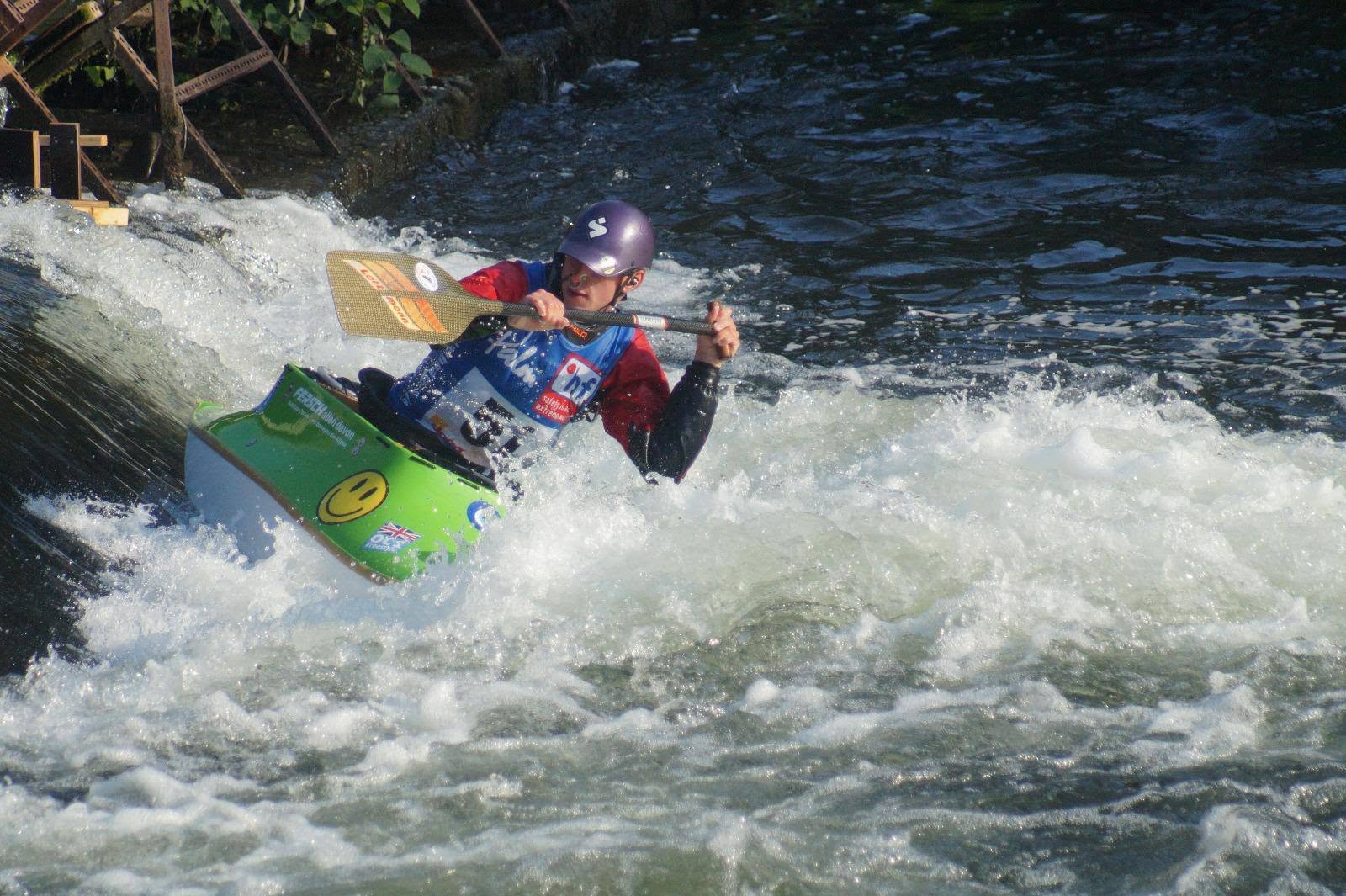
The aim
Good outfitting holds the paddler firmly enough to get maximum performance from the canoe, whilst still allowing an easy exit. Comfort matters too: numb feet and sharp pressure points reduce control and create avoidable risk.
Core components
Most freestyle OC1 setups use a foam saddle, two independent thigh straps or a lap belt, knee pads and shaped foot blocks or foot pegs. The backrest plays a large part in finishing or initiating moves. Sidewall foam helps drain the water when rolling and reduces the amount of water in the boat.
Airbags play a huge part in canoe outfitting. They keep water out of the boat, provide buoyancy to a swamped boat and hold any water that enters in a central position. Loose bags can hinder a paddler’s exit and allow water underneath, making the boat lurch around a feature and feel out of control. Custom airbags can be expensive, but if you want to be a champion, it is a small price to pay.
The higher the saddle, the more leverage the paddler has to throw bigger tricks. Too high and the boat becomes unstable; too low and the paddler’s reach can be compromised.
- Saddle: establishes kneeling height and balance
- Thigh straps: connect the legs to the hull
- Knee pads: spread pressure and improve grip
- Foot blocks: prevent the feet sliding backwards
- Hip or sidewall foam and backrest: reduce unwanted movement
Release and exit
Every strap system must release predictably under load. Practise releasing it on land and then in controlled flat water with suitable supervision. Avoid improvised hardware that can snag clothing, footwear or buoyancy equipment. Check that the airbags do not block the feet when exiting.
Adjust gradually
All saddles and outfitting are made from closed-cell foam. This is easily shaped to suit the comfort and needs of paddlers. Most people use knives, sandpaper or surforms. Change one element at a time, paddle the boat and record what improved or worsened. Small changes to saddle height or knee position can transform edge control. The wider the knees are, the more control you get. Narrow knees make rolling much harder.
Regular checks
Inspect glue, straps, buckles and foam before paddling. Replace worn components before they fail, and rinse the outfitting after silty or salty water.